# The Future of Data Storage? Look Up
## Metadata
- Author: Sebastien Jean
- Full Title: The Future of Data Storage? Look Up
- Category: #articles
- Document Tags: #ai #big-data #cybersecurity #economics #science #spacepower #technology
- Summary: A shoebox-sized data center landed on the Moon, proving space storage is possible.
Space data centers could provide sustainable, secure storage and faster edge processing.
But big hurdles remain: radiation, heat management, and high launch and maintenance costs.
- URL: https://www.thespacereview.com/article/5043/1
## Highlights
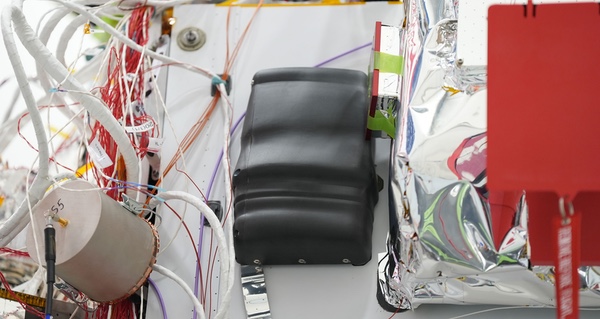
- In March of this year, [the world’s first hardware data center landed successfully on the Moon](https://phisonblog.com/lonestar-phison-revolutionizing-lunar-data-management/). The size of a shoebox, that one small bit of hardware represented a giant leap for the future of data storage and processing in space. And it was no publicity stunt. It was proof that off-world data storage is technically possible. ([View Highlight](https://read.readwise.io/read/01k60qbgqae6kv44mbrn7yj6wn))
- That assurance couldn’t come at a better time. With global data volumes doubling every several years, Earth-based data centers are struggling to keep up. As energy consumption, land scarcity, and environmental concerns increase, many enterprises are beginning to look upwards. ([View Highlight](https://read.readwise.io/read/01k60qc106z6g3f49mwbnh9146))
- The idea of putting data centers in space might sound like science fiction, but the forces driving this shift are very real. Artificial intelligence, cloud computing, and IoT technologies are fueling unprecedented demand for data processing and storage, which requires continual growth in the number of terrestrial data centers. ([View Highlight](https://read.readwise.io/read/01k60qdeekqpmz4fhzfe7cg7g5))
- In fact, McKinsey estimates global demand for data center capacity could almost triple by 2030, with AI capacity needs increasing 3.5 times and making up nearly three-fourths of the total. And finding suitable locations for new terrestrial data centers is getting harder due to a range of constraints. ([View Highlight](https://read.readwise.io/read/01k60qdna3tcjd9r28wd5a42zd))
- While we rely heavily on satellites for Earth observation, most satellite-generated data must still be transmitted back to Earth for processing. This creates severe bandwidth bottlenecks. Microwave links are limited by government-controlled allocations of a finite frequency spectrum and laser links are limited by line of sight—meaning a cloudy day can disrupt transmissions. ([View Highlight](https://read.readwise.io/read/01k60qehcwxae4v1ywkcx3drn8))
- Data centers and storage networks on or near the Moon don’t need water for cooling. They don’t consume limited energy resources, as solar power is ever-present. They don’t use valuable real estate or contribute to global warming. They’re less constrained by jurisdictional or sovereignty conflicts and less vulnerable to physical accidents or intentional attacks (than, say, undersea data transport cables.) For instance, a laser-linked data center in orbit could prevent such single points of failure. ([View Highlight](https://read.readwise.io/read/01k60qfbzcadwvcx2encrq0n1g))
- Processing data directly in orbit means raw data gathered via sensors can be stored and processed in space, then condensed into actionable insights sent to Earth. This is crucial for real-time applications such as Earth observation and disaster detection; national and space defense and awareness; IoT and autonomous systems coordination; and AI and machine learning models that depend on continuous data streams. ([View Highlight](https://read.readwise.io/read/01k60qfkwhw1fd3cfmwkxt8007))
- Though space launch investment amounts have adjusted in recent years, launching a single kilogram into space can still cost thousands of dollars. Hardware maintenance is also an issue. Repairing damaged systems remotely is difficult, even with robotics. Any infrastructure sent to the Moon or into orbit must be highly autonomous and durable. ([View Highlight](https://read.readwise.io/read/01k60qgtm5nnypzr3mng1g44v1))